The information you need can be searched for from here

CLOSE ✖
POINT!

Rivers are not just for viewing. They are an aspect of the natural environment worth actually entering and experiencing.
Rivers are not just for viewing. They are tourist attractions that invite participation. Natural environments featuring riverbanks and watersides, such as Akigawa Valley, tend to seem difficult to visit to people with disabilities and elderly people due to unsteady footing, but they can be transformed into safe, enjoyable places with the right combination of assistive devices, operating procedures, and other small on-site efforts.
Removing barriers that include riverbank gravel and differences in grade can enable everyone to enjoy not only the refreshing coolness, babbling, wind, and fragrance of the clear water but also river fishing, SUP (stand-up paddleboarding), and other water activities regardless of their personal differences.
The ability to shift values from places that are dangerous to visit to places where anyone can participate is the essential power of accessible tourism.
Shifting values from viewing to participation also enables business operators to provide experiential value by enabling people with disabilities to spend time alongside caregivers and companions. This also greatly expands the potential of the tourism business, including exploring new customer segments, creating a wider range of products, and contributing to the building of systems for cooperating with local business operators and accepting customers.
Key implementation points
・Access: To enable wheelchair users to safely move, confirm the user flow from the meeting place to the riverbank. Make sure you have a clear understanding of factors affecting safety and comfort, including gravel depth, differences in grade, slopes, the existence of narrow areas, and footing steadiness. ・Accommodation space: Select a place where it is comfortable to stay on the waterfront. Confirm that any chairs are placed on ground where they are unlikely to fall over, and make sure there is no risk of strong currents or rising water at the location. ・Changing clothes and resting: Long-term stays are assumed, so ensure shade and places where participants can rest. Also make sure to set up approaches in advance to help keep wet participants from getting cold, such as towels, protection against the cold, and heat retention. (It is also important to make adjustments according to the season and temperature.) ・Restrooms: Make sure you know whether there are restrooms accessible to wheelchair users and where they are located. In addition, confirm that any such restrooms can actually be used and that the flow of users leading to them is safe. ・Waterside safety management: The safety of rivers is greatly affected by the current flow speed, water depth, and changes in the weather. Therefore, clarify the criteria for judging feasibility, and adjust the experience details depending on the condition of each participant. ・Emergency preparedness: Share the communication system and response procedures to prepare for the possibility of participants falling down or feeling unwell. It is also necessary to confirm the following in advance: the possibility of entry by emergency vehicles and the flow to the nearest medical institution. Operating tips
Identify any risks in advance, including gravel, differences in grade, slopes, and narrow spaces, by mapping the flow of people: reception → briefing → riverbank movement → experiences (relaxing in a chair outdoors (“chairing”) / fishing / SUP) → withdrawal → changing clothes and resting → disbanding.
If there is a shortage of equipment, make up for it by rearranging the participant flow (selecting routes with steady ground), combining assistive devices, adding rest points, etc.
In addition, on the day of the event, respond to any changes in not only the weather conditions but also the river situation (the water volume and current flow speed) by adjusting the experience time accordingly, and strive to ensure the safety and comfort of participants by assigning multiple people to each person with disabilities or elderly person. It is also important for the management to clearly divide relevant roles, including pushers, pullers, supporters, and safety supervisors, to ensure that “every participant can move based on the same assumptions.”

Akigawa Valley Nature Experience
(Chairing, River Fishing & SUP Experience)
Monitor Tour: Event Report
Nature Experience Tourism Promotion Project that everyone can enjoy

Tokyo is promoting “Nature Experience Tourism That Everyone Can Enjoy” throughout the city, including people with disabilities and elderly people.
On September 10, 2025, a trial tour, the Akigawa Valley Nature Experience (Relaxing in a Chair Outdoors & River Fishing & SUP Experience): Management Experience to Support People with Disabilities, was held in Akigawa Valley, Akiruno City. Its objective was to give business operators and participants the opportunity to acquire the knowledge necessary to provide safe nature experiences, including the required technology and operating procedures, while experiencing all of this.

Movie

Contents

Overview of the experiential trial tour of the nature of Akigawa Valley

The wide range of participants included people with disabilities, their caregivers, travel agency employees, and business operators who provide nature-experience-based learning in the city. The instructor was Mr.Masami Nagahashi,Chairman and Chief Researcher,NPO Universal Tourism Research Institute, who lectured on approaches for achieving “tourism that anyone can safely participate in” as well as the importance of eliminating on-site barriers one by one, and a one-day training format was used.
The venue, Akigawa Valley in Akiruno City (in the Akigawabashi Kasen Park area), is easily accessed from the city center, and the area’s natural environment includes riverbanks, watersides, and greenery, which made it easy to accept a diverse range of participants. Another important point is that the chosen site had the right conditions for enabling wheelchair users, elderly people, and others who require mobility-related consideration to participate by combining assistive devices with suitable user flow design.
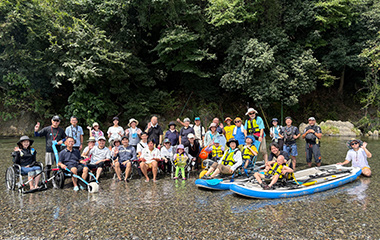
The group photo of the test tour participants.

Training session (1): nature-experience planning procedures (planning → previewing → verification)

Mr. Tomohiro Fuchiyama, an accessible tourism advisor, emphasizes that, when it comes to planning nature experience tourism, it is essential to carefully proceed in three stages: hypothesis → previewing → verification. In terms of Akigawa Valley nature experiences, he was in charge of planning relaxing in a chair outdoors and river fishing experiences last year as well. These experiences ended up getting cancelled the day before they were scheduled due to poor weather, but he still carefully planned them as part of the on-site tour.
This time, based on the hypothesis that, “if suitable chairs were installed on large SUP boats, people with disabilities would be able to enjoy SUP experiences in Akigawa,” advance verification was conducted with cooperating business operators (described below). Although there are local examples of outdoor wheelchairs (HIPPOcampe) being utilized to achieve accessible SUP, when spending time in rivers that have a shallow water depth, Mr. Fuchiyama suspected that low chairs with a backrest and armrests would be more suitable. He also tried out two other options, for a total of three: a wheelchair and a soft legless chair (zaisu). The wheelchair’s seat surface was too high and unstable (plus the SUP seat would be fixed in place so it did not have to be a wheelchair), while the legless chair was fixed in place and could be sat in, but its soft materials made it difficult for people with disabilities, who tend to have a weak core, to maintain a proper sitting position. In the end, a “low camping chair with armrests,” which had a low seat surface to make it easy to get in, a backrest and armrests to help maintain a good sitting position, and a low height to ensure stability, was the most suitable, and, by safely fixing such a chair in place, it became possible to provide SUP experiences.

The scene of Mr. Tomohiro Fuchiyama giving an explanation.

Training session (2): operational flow on the event date (setup → experience → withdrawal)

important for multiple people to carefully monitor them while paying attention to the situation of the ground. During the withdrawal stage, the flow of people to areas where they could change their clothes and rest was confirmed as equipment was inspected and put away, and everyone confirmed the physical condition of participants and shared possible points of improvement. According to Mr. Fuchiyama, “Instead of engaging in special preparations, it is better to carefully and continuously confirm the situation on the day of the event to ensure safety.”

The scene of Mr. Tomohiro Fuchiyama giving an explanation.

Business operators supporting the trial tour

【Bochibochi Adventure Susono】
Bochibochi Adventure Susono is located on the gradual slopes at the foot of a mountain, and, as is implied by its name, is based on the concept of “not pushing yourself too hard and enjoying things little by little.” This company offers outdoor tours in Okutama, including canoe and SUP experiences. During the recent trial tour, Bochibochi Adventure Susono collaborated starting with verification during the advance preparation stage. They transported a SUP boat from Okutama to Akigawa, installed a low camping chair with armrests on it, and thus helped to provide a SUP experience (including implementation support as an instructor).
【Tokyo Mountainside DMC】
The so-called “Tokyo mountainside” area is located near the city center and is home to an abundance of natural assets, including mountains, forests, valleys, and riverheads. Tokyo Mountainside DMC cooperates with Akiruno City as well as multiple local organizations, business operators, and communities while running an inquiry-based nature-experience learning school and offering adventure travel services. During the recent trial tour, Tokyo Mountainside DMC provided implementation support in the form of equipment and instructors for the following Akigawa experiences: traditional river fishing and relaxing in a chair outdoors.
【Significance of cooperation】
Business operators do not handle management on their own. Instead, they cooperate with local outdoor guides, local partner organizations, tourism operators, and others to achieve both safety management and experiential value. Given the rough terrain of riverbank and waterside environments, it is important for various business operators to offer their expertise as a way to complement efforts from the perspectives of field knowledge, operational know-how, and product creation, and this cooperative system serves as the foundation for increasing the sustainability of accessible tourism.

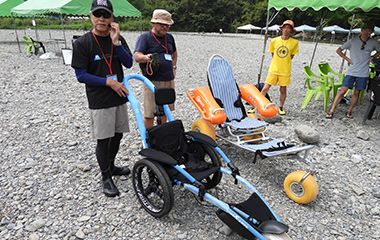
Utilized assistive devices and how to use them (HIPPOcampe / Mobi-Chair / JINRIKI)
During the Akigawa Valley nature experiences, multiple assistive devices were used to help respond to the unsteady footing of local riverbanks and other environments. Note that whether such assistive devices can be brought in or used differs depending on the facility manager, so advance confirmation is necessary.
1) Outdoor wheelchairs (HIPPOcampe)
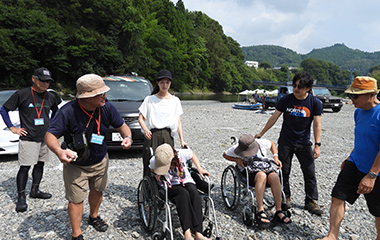
These wheelchairs are capable of stably moving in riverbank environments, which include gravel and grade differences, to reach the riverside. During advance previews, it is important to confirm the travel route and divide the roles of pushers and supporters.
2) Amphibious wheelchairs (Mobi-Chair)
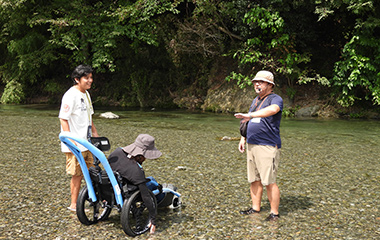
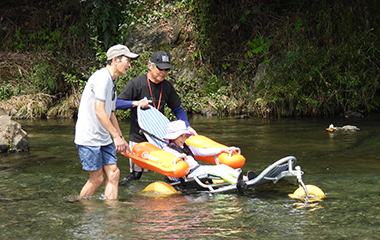
These amphibious wheelchairs can be used both on land and in the water, including riverbanks, waterfronts, and other rough terrain as well as shallow water, and their wheels and armrests incorporate buoyant material to ensure consistent buoyancy. These wheelchairs can therefore handle anything from gravel-heavy riverbanks to waterside environments, and, by having caregivers push such wheelchairs, they enable participants to safely enjoy experiences on the surface of the water.
The key points in terms of using these wheelchairs are as follows: (1) When entering the water, have multiple people provide support, including people positioned to ensure that the wheelchair does not lose its balance and tip to the left or right. (2) Confirm the river current flow and water depth as well as the status of stones on the ground, and make sure the experience only covers a short, reasonable distance.
3) Wheelchair pulling equipment (JINRIKI)
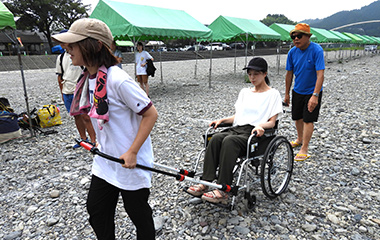
This equipment provides support to ensure steady progress by lightening the movement load in areas where pushing and pulling are difficult, such as gravel roads and gradual slopes.
By suitably combining these assistive devices, we confirmed that it is possible to establish a safe flow of people that includes the route from the parking lot to the riverbank and waterside as well as experiences on the water.

Outdoor wheelchairs (HIPPOcampe)

HIPPOcampe

Wheelchair pulling equipment (JINRIKI)

JINRIKI

Key points on setting up the necessary environment

When implementing the Akigawa Valley nature-experience program, it is important not only to prepare assistive devices but also to set up a suitable environment and share information in advance.
・Photos of the flow of people from the parking lot to the riverbank and waterside as well as diagrams that make it easy to understand whether there are differences in grade or slopes, the distance, the gravel depth, the road surface situation, and similar details ・Disclose information through suitable materials on the website so that participants can gain an advance understanding of how to safely move. ・Take care of details that include ensuring shade and rest areas, the existence of foot washing areas and changing rooms, and the estimated water volume and current flow speed, and provide such information to participants. Setting up such an environment serves as an important foundation for accessible riverside tourism and helps to increase both the sense of security enjoyed by participants and their desire to participate.

Implementing management (ensuring enjoyment by both participants and caregivers)

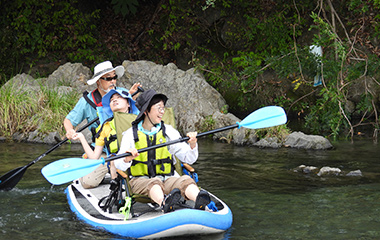
hen participants boarded the large SUP boat, which was equipped with a low chair, care was taken to maintain their position and assign roles so that the participants could enjoy the scenery from a different perspective than the land while traveling leisurely across the water’s surface. Through such step-by-step experiences, everyone had the chance to share nature regardless of their disabilities, and we even heard that some people “want to visit this place again.”

The scene of entering the river in an Amphibious wheelchairs (Mobi-Chair).

Mobi-Chair

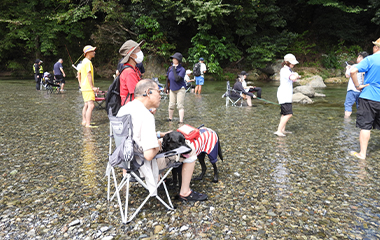
The scene of wheelchair users and visually impaired people took on the challenge of "Chairing"
The scene of wheelchair users and visually impaired people trying out the "SUP experience" on a large SUP boat.

After the nature-experience program ended

After the experiences ended, the used assistive devices were withdrawn, and support was provided to enable participants to wash their feet, change their clothes, and rest. A multiple-person system was used to help participants safely move from the riverbank to the parking lot and changing areas. More specifically, participants used changing rooms and restrooms that were confirmed in advance to change their clothes. Because there were wheelchair-accessible restrooms and rest areas available in the area, it was not too difficult to secure flow lines after the experiences.
We then washed, dried, and inspected the used equipment to get ready for the next time it will be used. In addition, immediately after the experiences, we recorded and shared information on participant feedback and facial expressions as well as any issues encountered during movement, and this process is important for making improvements in terms of how subsequent events are managed.

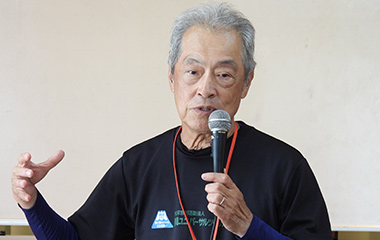
Workshop lecture: Mr. Masami Nagahashi, Chairman, Universal Tourism Sougoukenkyujo

Mr. Nagahashi explained that, when it comes to the accessibility of tourism, interest in participating is affected not only by “physical barriers” but also by complex factors that include “means of transportation,” “information shortages,” and “environmental conditions.” He emphasized that it is important for business operators to correctly understand such issues and strive to resolve them one by one.
In particular, three especially important elements that were mentioned in the lecture were (1) communicating information, (2) introducing assistive devices (3) and setting up the environment. Regarding the communication of information, Mr. Nagahashi touched on the necessity of clearly spelling out details including transportation access, the availability of accessible equipment, differences in grade, and the restroom situation in advance, and he said, “It is important to eliminate everyone’s anxiety regarding whether they can actually go to make it much easier to participate.”
Regarding the introduction of assistive devices, he listed specific examples that included outdoor wheelchairs and pulling equipment, and he said, “With the right equipment, people can participate in nature experiences that they had to give up on in the past.” In terms of dealing with introduction costs, he also said that utilizing the support systems provided by state and local governments can make introduction a more realistic option.
Finally, in terms of setting up the right kind of environment, Mr. Nagahashi said that even small efforts, such as setting up temporary ramps and simple benches, can profoundly change the accessibility of experiences, and he described the importance of having a perspective based on real-life experience as follows: “When on-site staff members try out the same itinerary as guests, it can be the most effective way to identify possible improvements.” According to him, simply having the right equipment is not enough. It is also important to “ensure that such equipment is actually safe to use” and promote this as the standard approach to achieve sustainable accessible tourism.

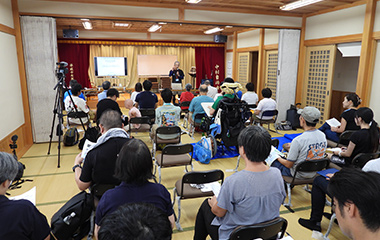
The scene of  lecture by Mr. Nagahashi.
Photo of Mr. Nagahashi

Participant feedback

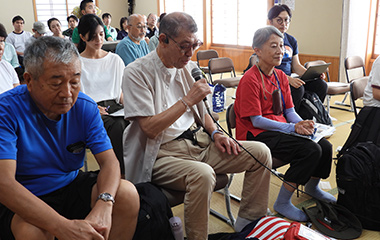
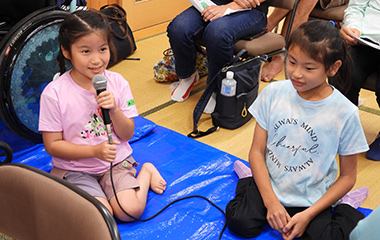
Participants expressed their honest opinions regarding their experiences, including the following: “That was the first time I ever rode a SUP boat, and it was interesting.” “It was scary at first, but then it got fun.” “I want to go to the river again.” Meanwhile, people who participated with their children suggested that they made shared family memories of waterside nature experiences: “I was so happy to be able to share an experience with my child.” “This was the first time I ever played in a clear stream, and it was an extremely wonderful experience.”
At the same time, people in charge of the actual work, including travel agencies, held practical discussions on operational methods, the assignment of roles, and establishing acceptance systems, and the discussion topics later expanded to include how public relations and the communication of information should be handled. Their comments implied that the experience resulted in not merely temporary but rather ongoing interest: “I want to actively convey this as a genuinely fun experience.” “I want this to be communicated as a travel package.” “I look forward to participating again.”
Finally, feedback from business operators and other stakeholders suggested that they will determine their future course based on their respective positions: “Sustainability and Monetization will be challenges.” “It is important for governments and business operators to share an awareness of related issues.”
This training turned out to be an opportunity to experience the fact that even the possibility of people participating in challenging waterside environments can be expanded by preparing, cooperating, and effectively conveying how much fun such experiences can be. Everyone is looking forward to seeing how what we learned from these experiences and discussions can be applied to future initiatives.

Photo of the test tour participants.
Photo of the children who participated in the test tour.

Notes on making arrangements

In addition to sharing information in advance (the status of participants, necessary considerations, and communication systems), it is important to confirm movement-related details, including the flow of movement from the parking lot to the riverbank, vehicle arrangements, waiting areas, and cooperation related to emergency transport. It is also important not only to have restrooms, changing rooms, and rest areas but also to confirm in advance that “they are actually safe to use.” Furthermore, including accessibility information that includes distances, road surface situations, and the existence of differences in grade on recruitment pages and in informational materials can help give participants a sense of security.

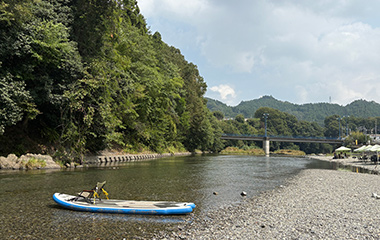
The scenery of the Akigawa riverbank.

Subsidy for Nature Experience Tourism Promotion Project that everyone can enjoy

Amphibious wheelchairs and other equipment used for nature experiences can be introduced by using a subsidy system introduced by Tokyo. This makes it possible to reduce initial costs while providing extremely safe experiences, thereby supporting organizations hoping to enter the nature experience tourism business.
Details: https://www.sangyo-rodo.metro.tokyo.lg.jp/tourism/kakusyu/nature/

This trial tour made it clear that even activities once considered too difficult for certain kinds of people to access can be achieved with the right preparation and cooperation.
Little realizations and lessons can serve as a major step on the way to making the local natural environment accessible to as many people as possible.
We hope that you will all apply the seeds of change revealed by this event as you strive to develop your own businesses as well.

Article List return to
top of
page.